
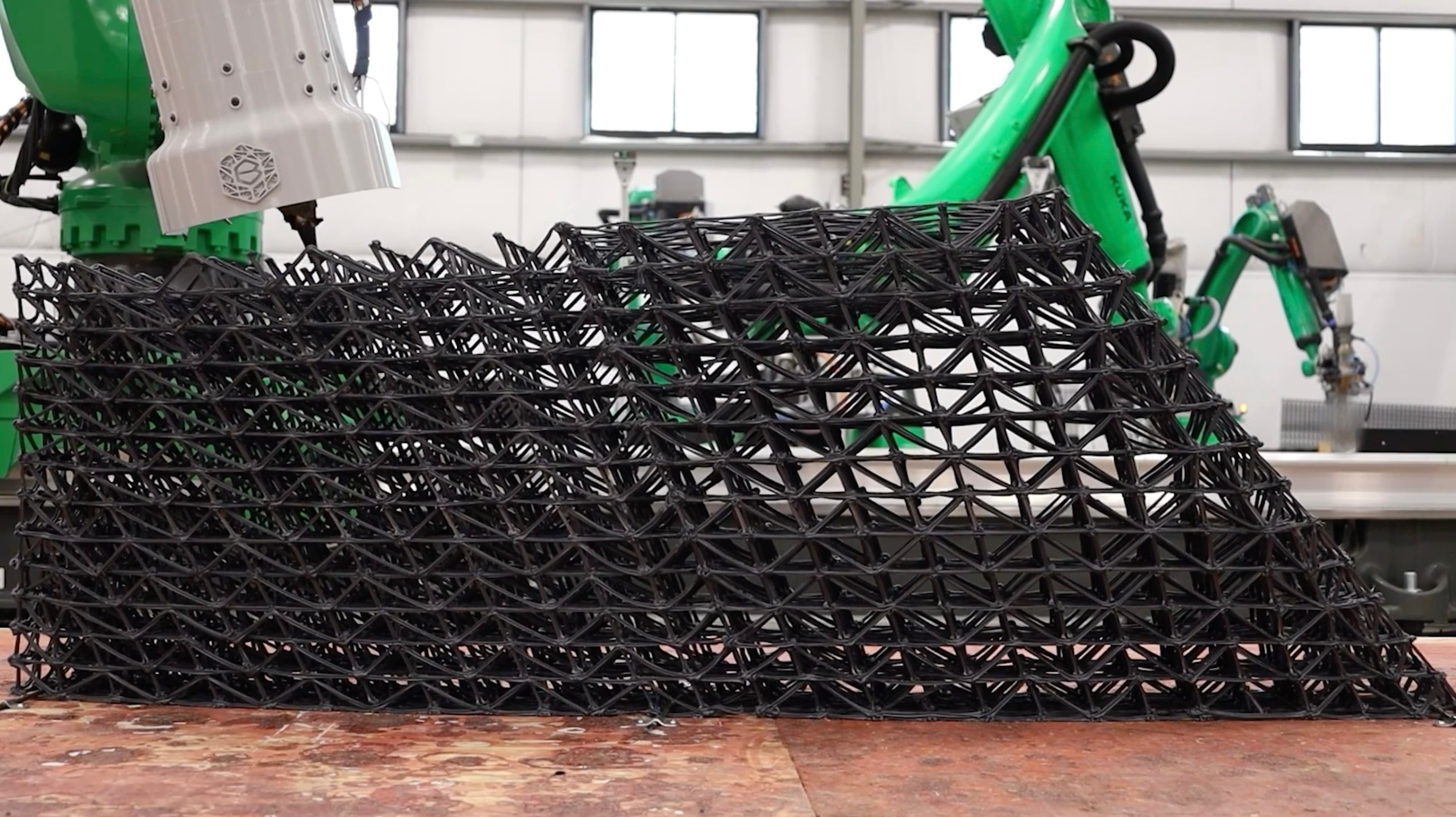
Robots can 3D print large polymer or metal forms (the photo above shows an example at Branch Technology—here is video), but what is the right way for collaborating robots to work together to 3D print parts that are even bigger? The “robot swarm,” with each robot doing 3D printing, offers an alternative to a single, large, fixed additive manufacturing machine. But the robots have to be programmed to 3D print in tandem in this way, and there are different approaches.
Exploring this use of robots has been the work of a team at the University of Texas at Austin including Ronnie Stone, who presented the work at ICAM, the International Conference on Advanced Manufacturing.
One approach to programming a swarm of robots is this: Each robot is programmed individually to 3D print its own section of the larger part. That is, each robot requires a separate program and separate programming effort.
Another approach is this: The robots essentially crowdsource. They are all given a shared set of rules about what needs to be printed and how to defer to one another, and they work together within this context.
The interesting finding is that there is no right answer. The two different approaches have different advantages
I recently posted a collection of video reports from ICAM 2026 on ideas related to scaling part production in laser powder bed fusion.
My video from ICAM on programming robots does not fit that theme, so I wanted to share it separately. The questions it explores related to deploying squads of robots for large-size AM are (in my view) fascinating and even kind of delightful.
Here is my account of the work of UT Austin related to the different modes of collaboration for robots working together to 3D print a large part: