Here is a sequence of advances perhaps no one would foreseen before all of these steps played out:
Robots applied to manufacturing allow for a different approach to architectural forms that brings new options in materials for construction.
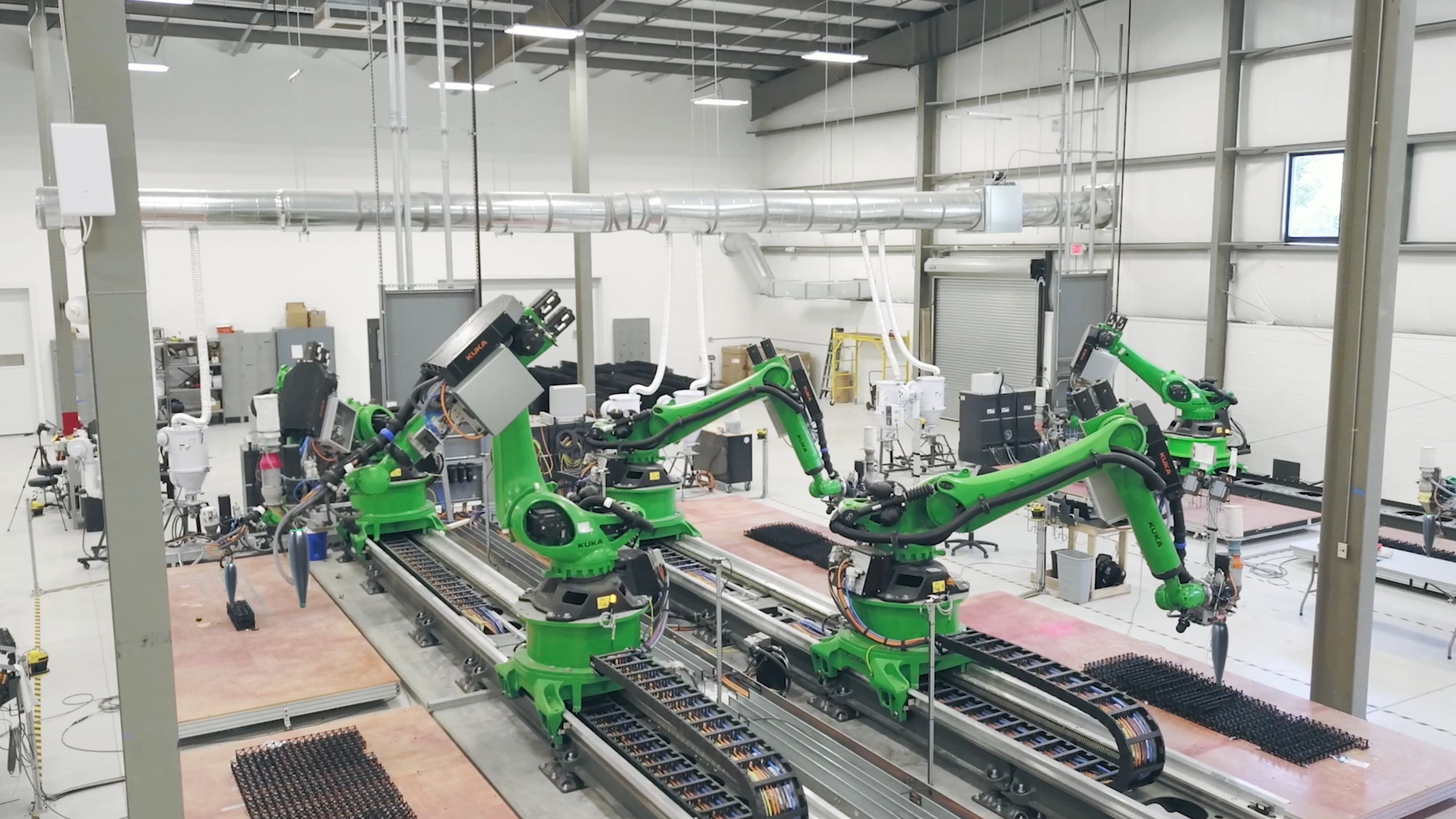
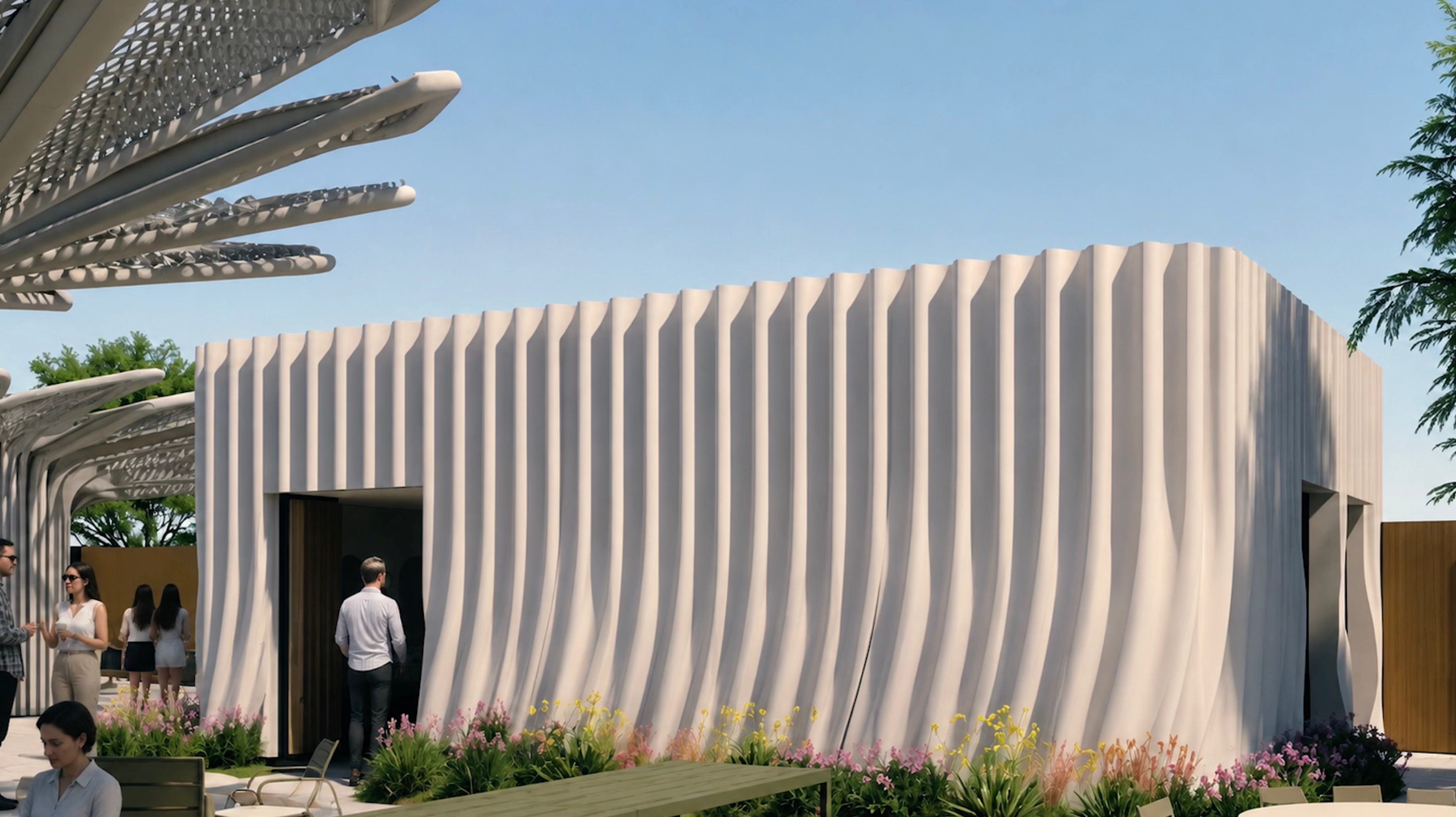
Branch Technology in Chattanooga, Tennessee, is the company playing out this sequence. The company uses a fleet of robots to produce structures such as building facades that would otherwise be made by hand by construction workers on a job site.
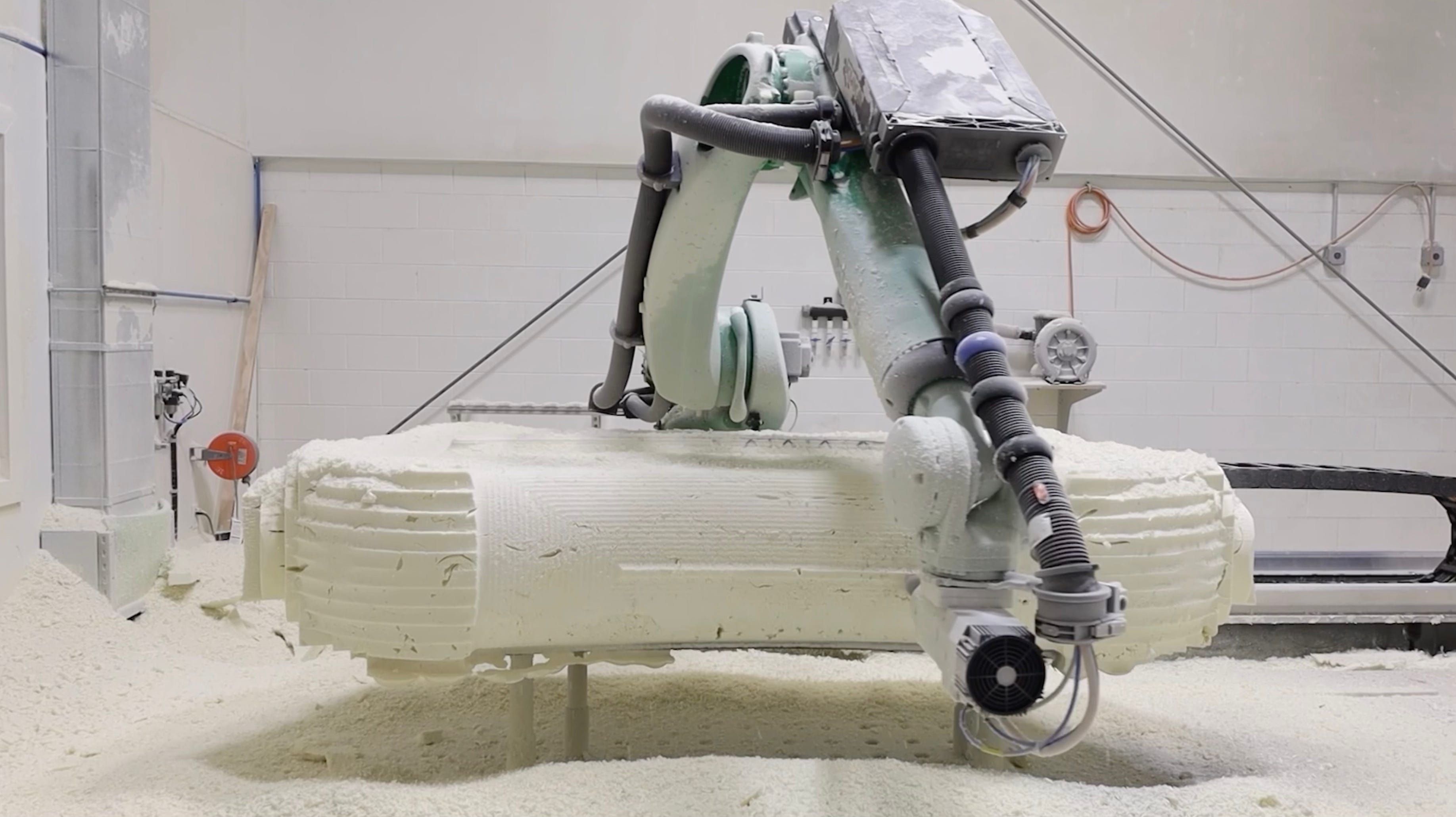
The robots do 3D printing, but there is more than this. Rigid structures are made via 3D printing in one material, foam infilling with another material, and precision milling of the entire form. Robots do all of this (the mlling is seen above).
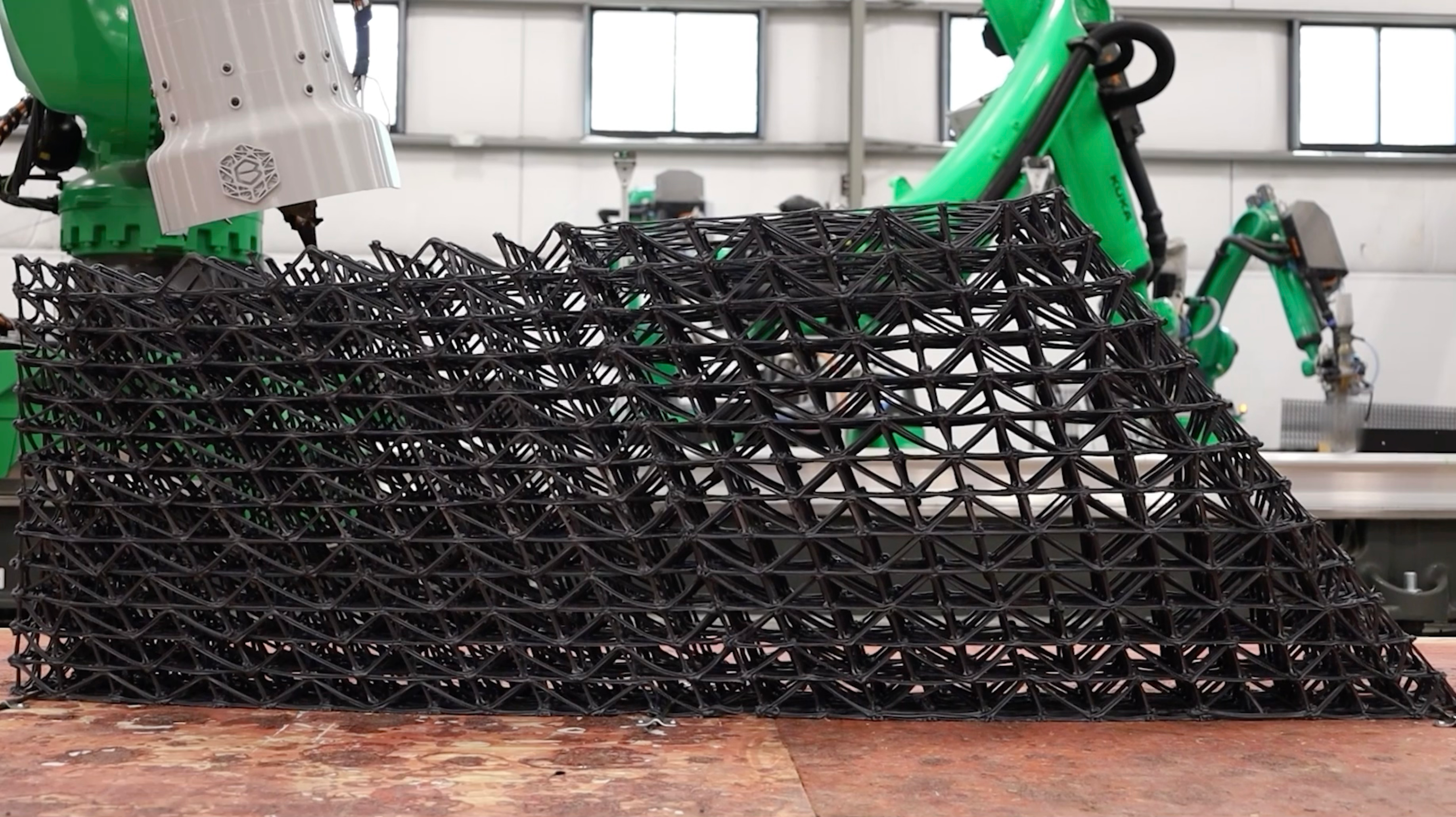
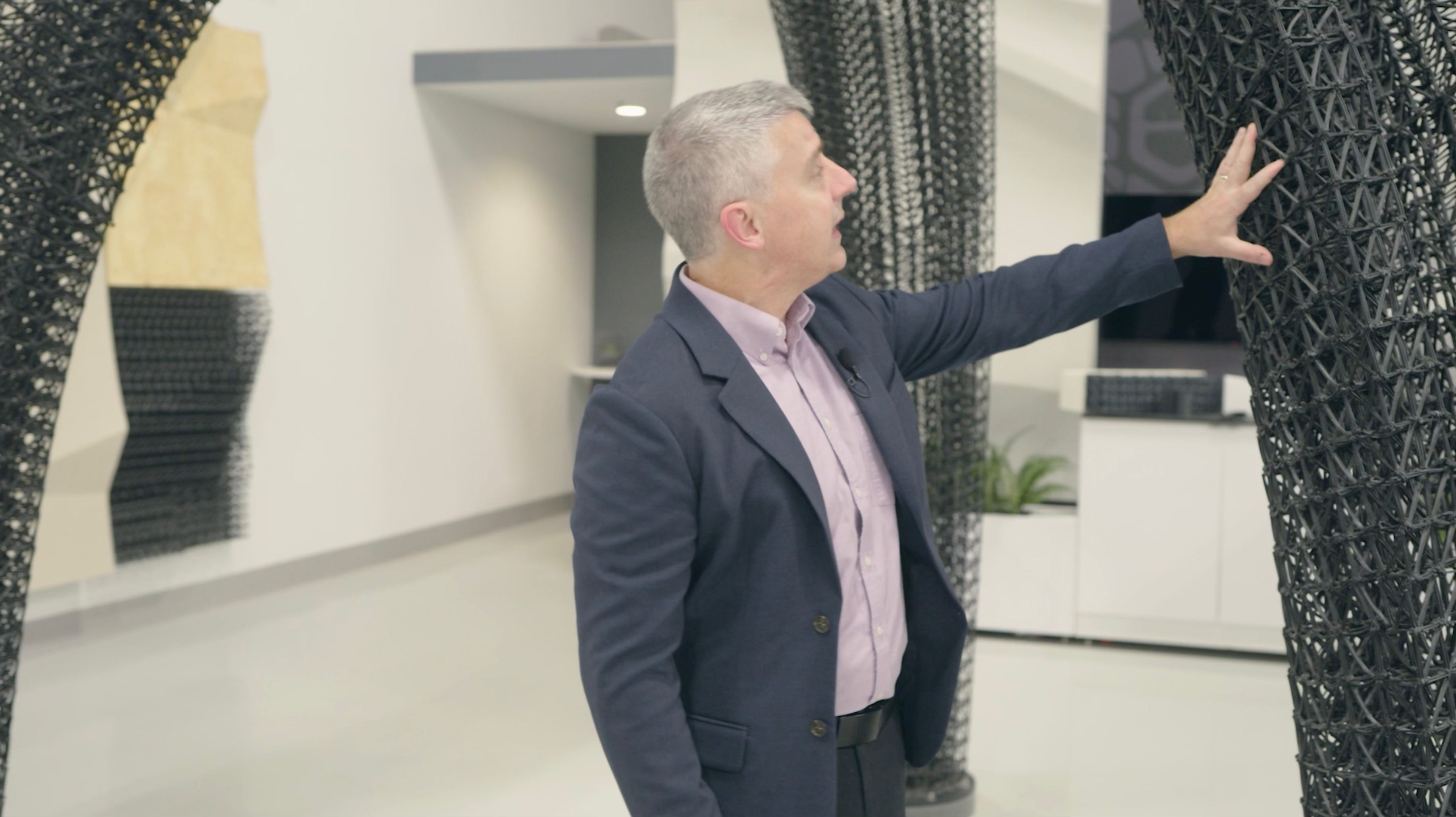
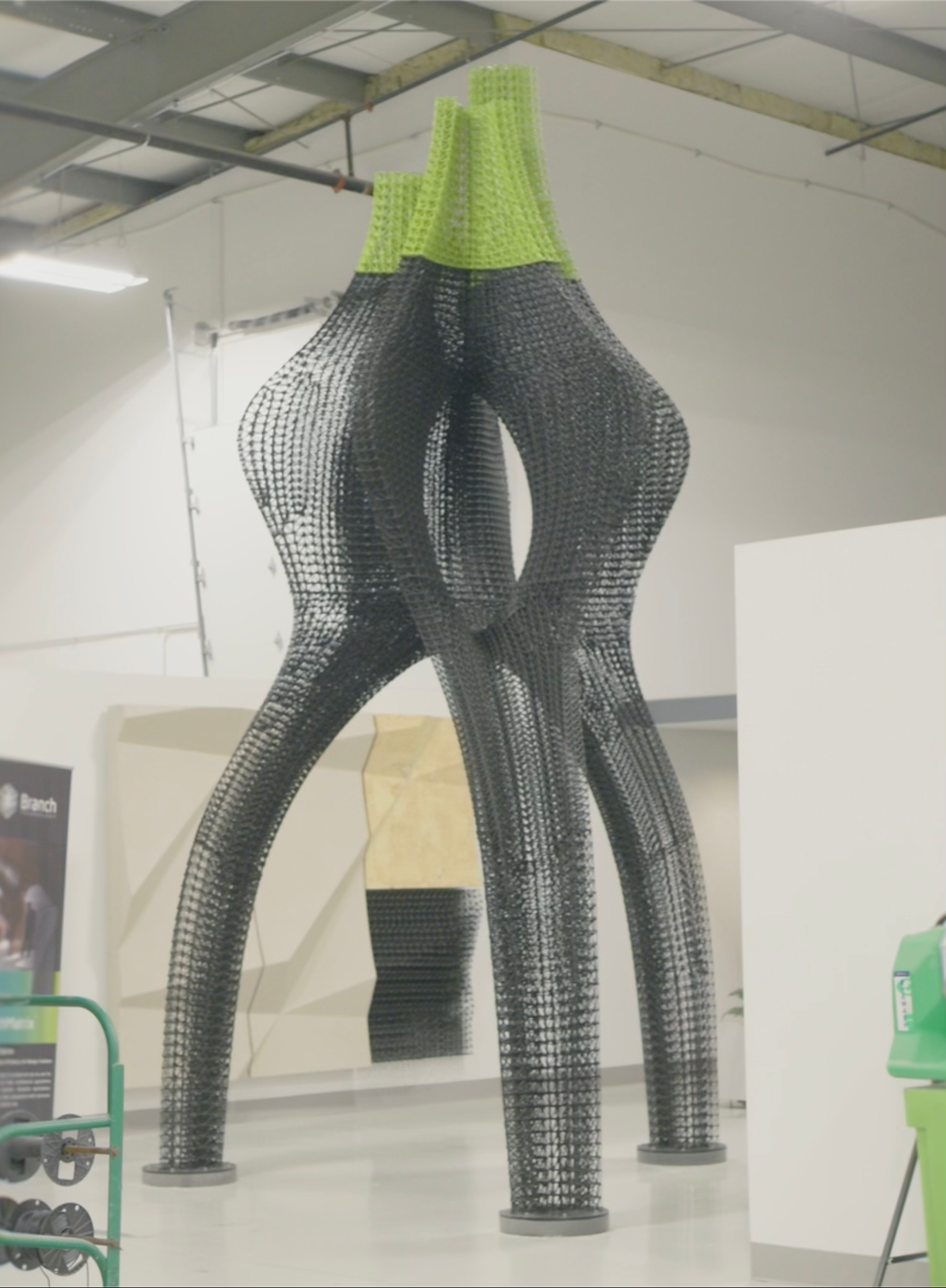
The 3D printing is unusual. Branch’s patented approach to 3D printing does not involve extruding material to stack layers, but instead involves pulling material strands like taffy and joining them to form lattices. The resulting rigid lattice forms fill only 7% of the volume with material. (The remaining 93% gets the foam infill that is then milled.)
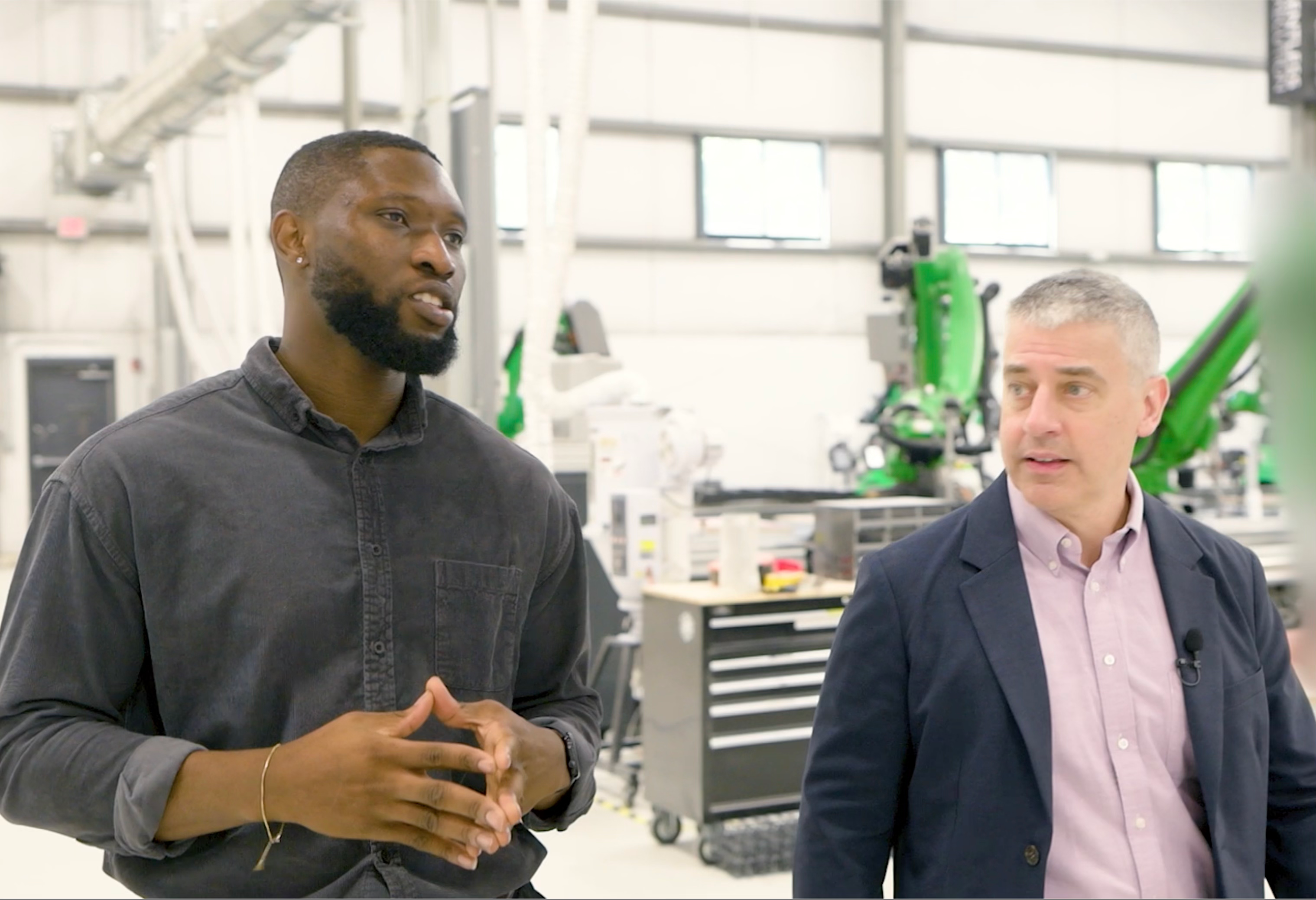
The next step: Branch Technology is bringing more sustainable options in materials to its architecture and construction customers. Ileri Giwa (above left) is one of the company’s researchers succeeding with bio-based polymers as a replacement for using petroleum-based polymers in the lattice form.
Only the starting point of applying robotic manufacturing in a factory, in place of onsite construction, makes this shift in building materials conceivable.

I visited Branch Technology to learn about all of this for an episode of Manufacturing Unlimited. Giwa will present on his research at the International Conference on Advanced Manufacturing (ICAM), the sponsor of the show.
Watch our new episode here, which includes our conversation as well as footage of the robotic operations including foam infilling, milling and the lattice 3D printing: