
I have traveled the world to report stories of manufacturing technology advances, and this is the first time my reporting has taken me to a thrift store.
A Habitat for Humanity ReStore in Austin, Texas, is the pilot site for a project funded by the National Science Foundation that employs 3D printing to realize a new model for plastics waste recycling and plastic part production.
The project is called ReCreateIt. It is the subject of the latest episode of Manufacturing Unlimited, my new video series produced by the ASTM International Additive Manufacturing Center of Excellence and sponsored by the International Conference on Advanced Manufacturing (ICAM), where this technology was presented. Story follows, and I link to the episode below.
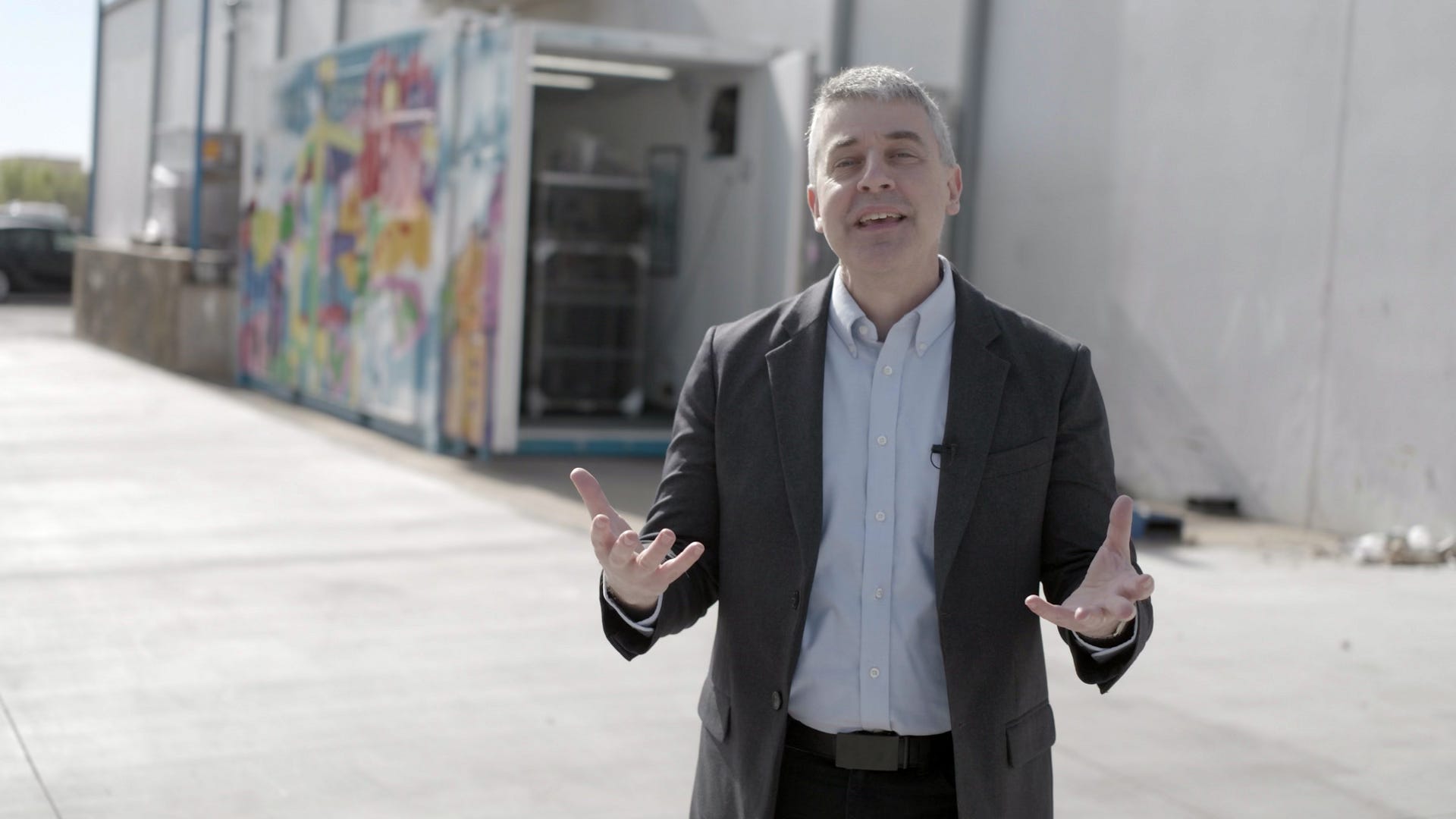
A lot just outside the Austin ReStore is where a modular manufacturing cell (seen behind me) transforms discarded plastic into products sold in the store.
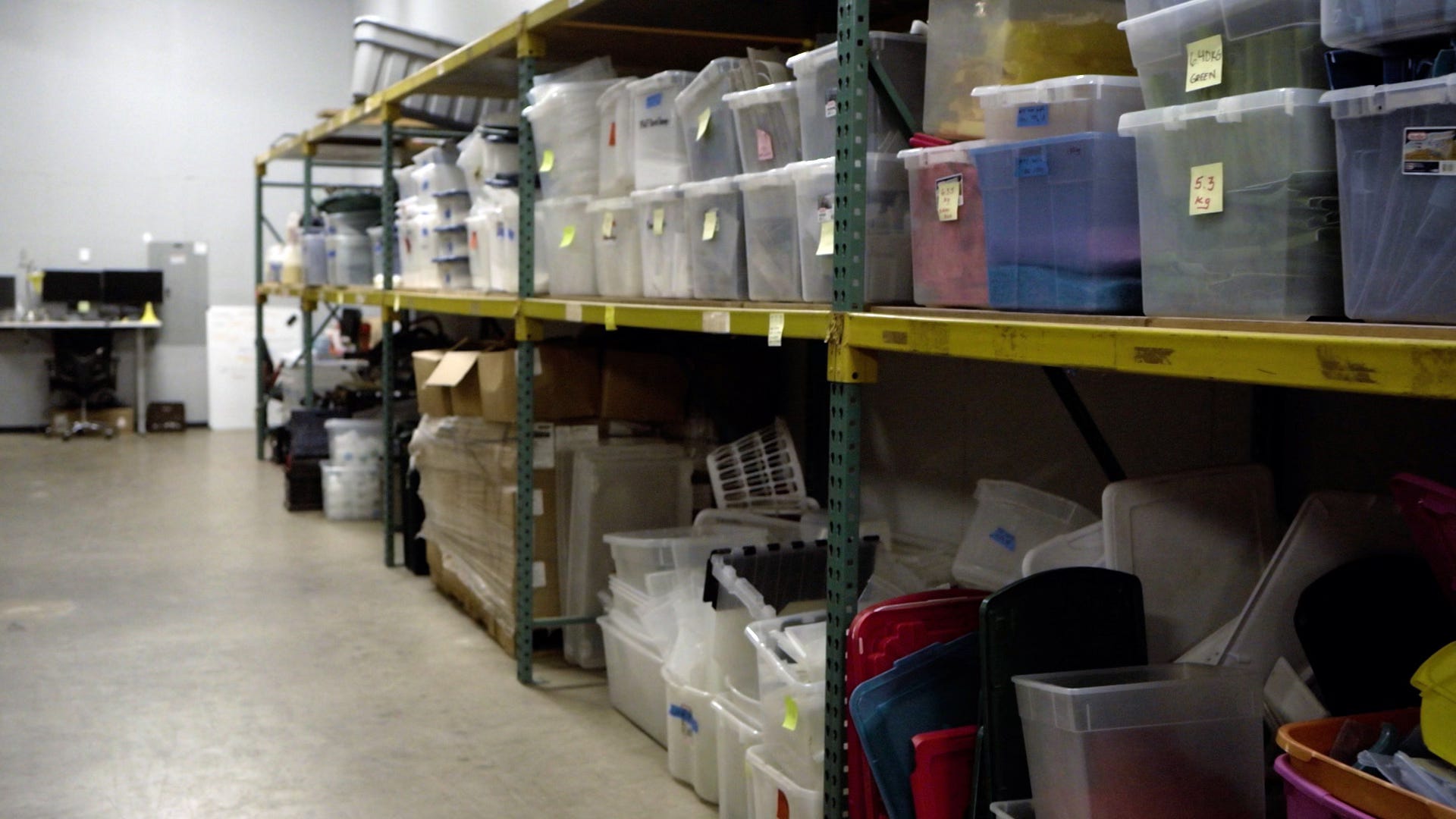
The plastic reclaimed in this way is from plastic bins—a category of plastic items this donation center receives in huge quantities and otherwise has to discard.
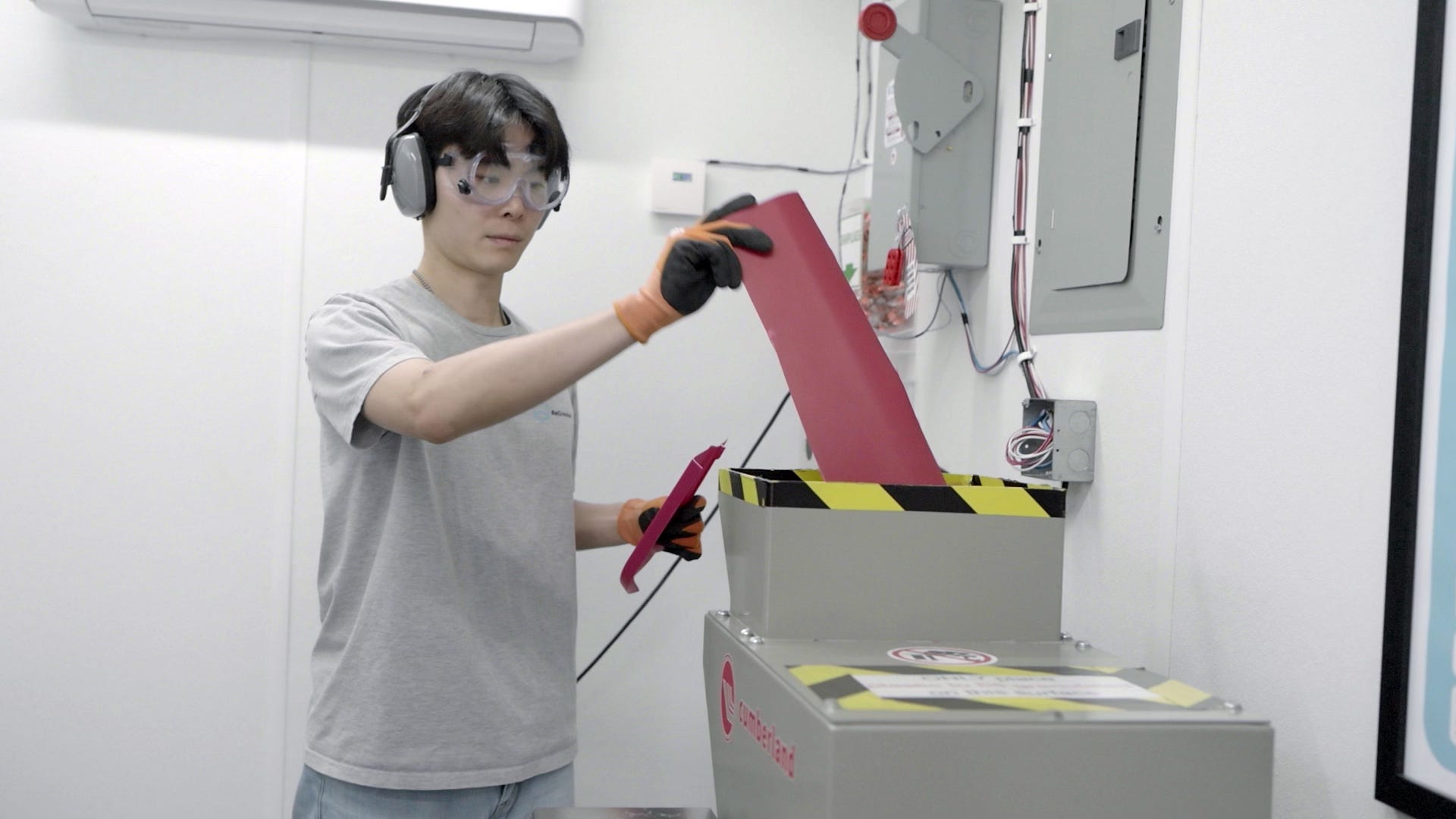
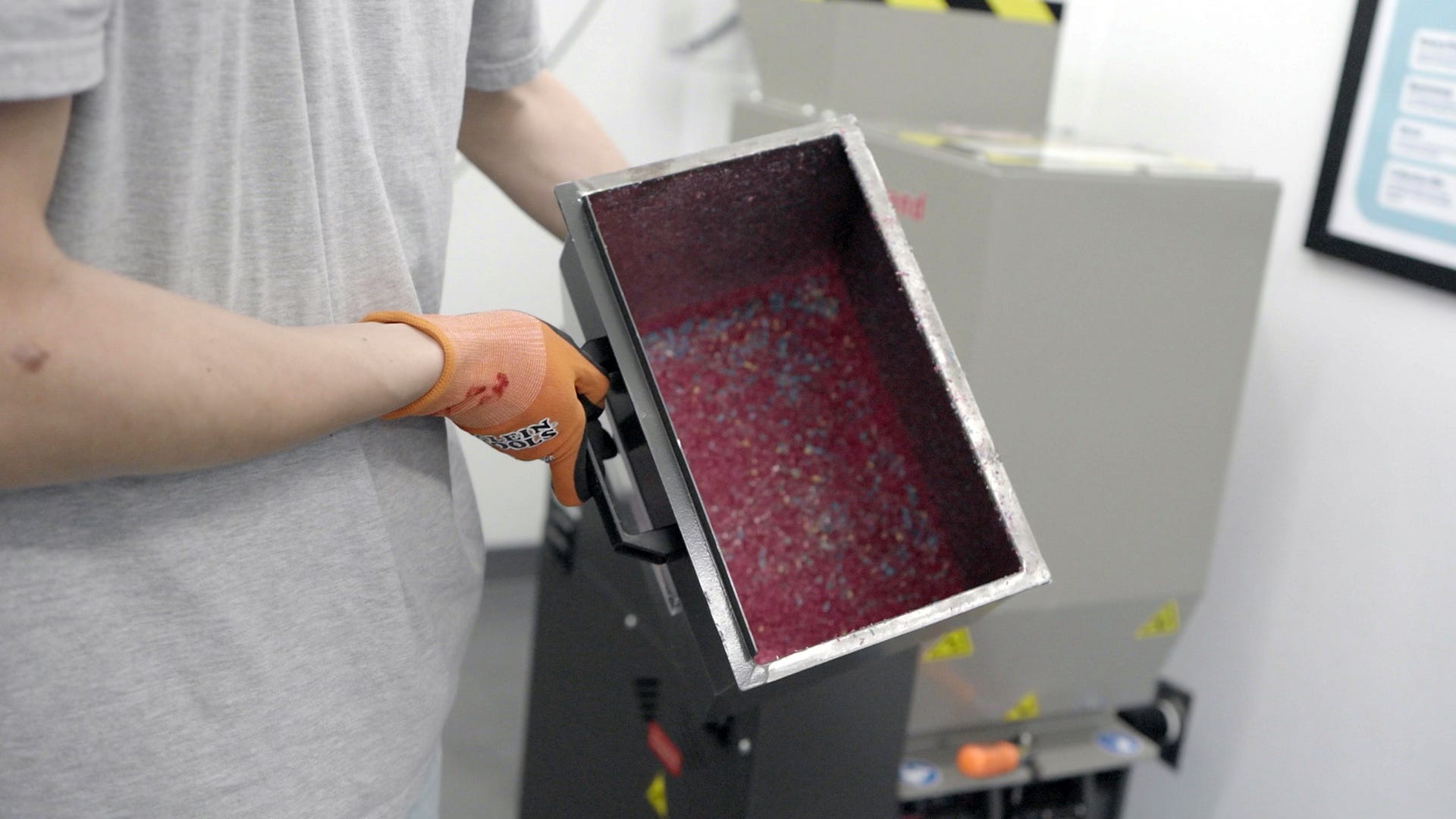
Through the ReCreateIt project, these bins are now ground into flake, which can be fed directly into a large-format 3D printer.
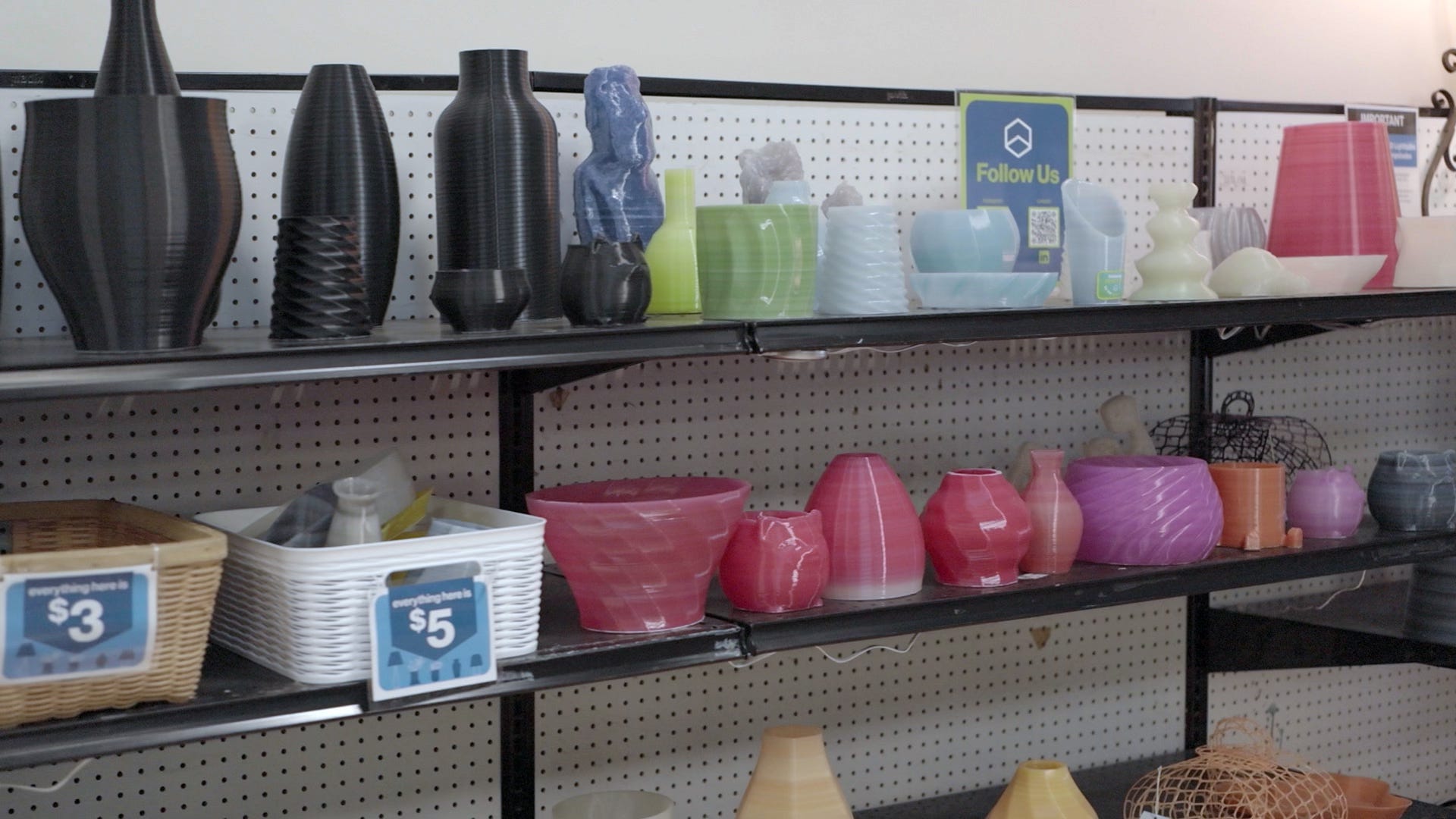
The result is stools, lampshades, vases and other products now sold in the store, made from material previously headed toward disposal. This model illustrates how waste plastic can be converted into any locally needed products or parts.
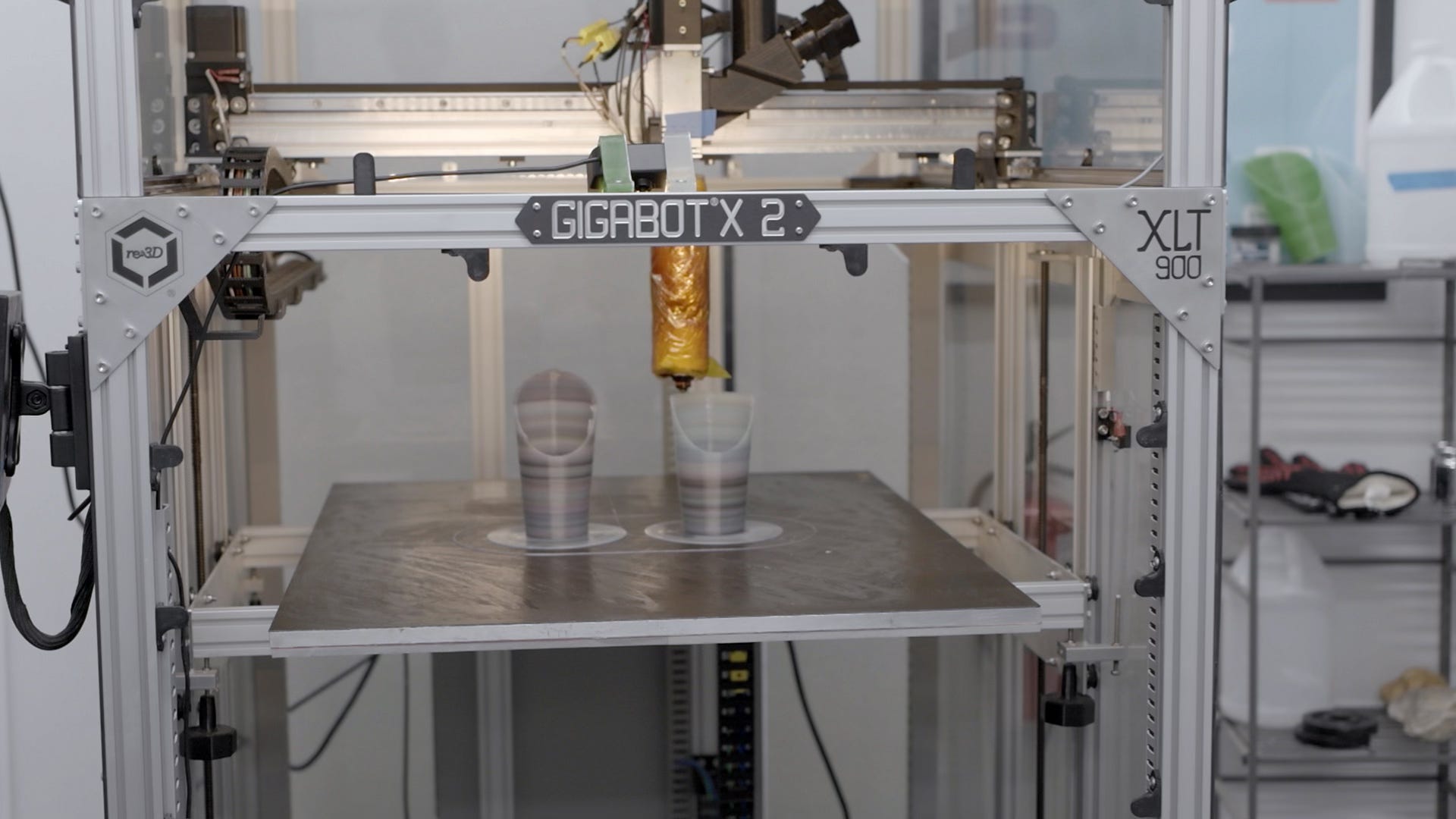
A key technology comes from Austin-based 3D printer maker Re3D. The company engineered an extrusion system capable of producing repeatable, high-quality parts using the ground plastic flake as the feedstock. Thanks to this technology, a simple plastics shredder is sufficient to convert solid plastic into additive manufacturing raw material.
Carolyn Seepersad, PhD, of Georgia Tech (appearing in the episode) was part of the team that has developed not only path strategies for 3D printing effectively with the recycled material, but also filters alerting users to geometries not likely to print well.
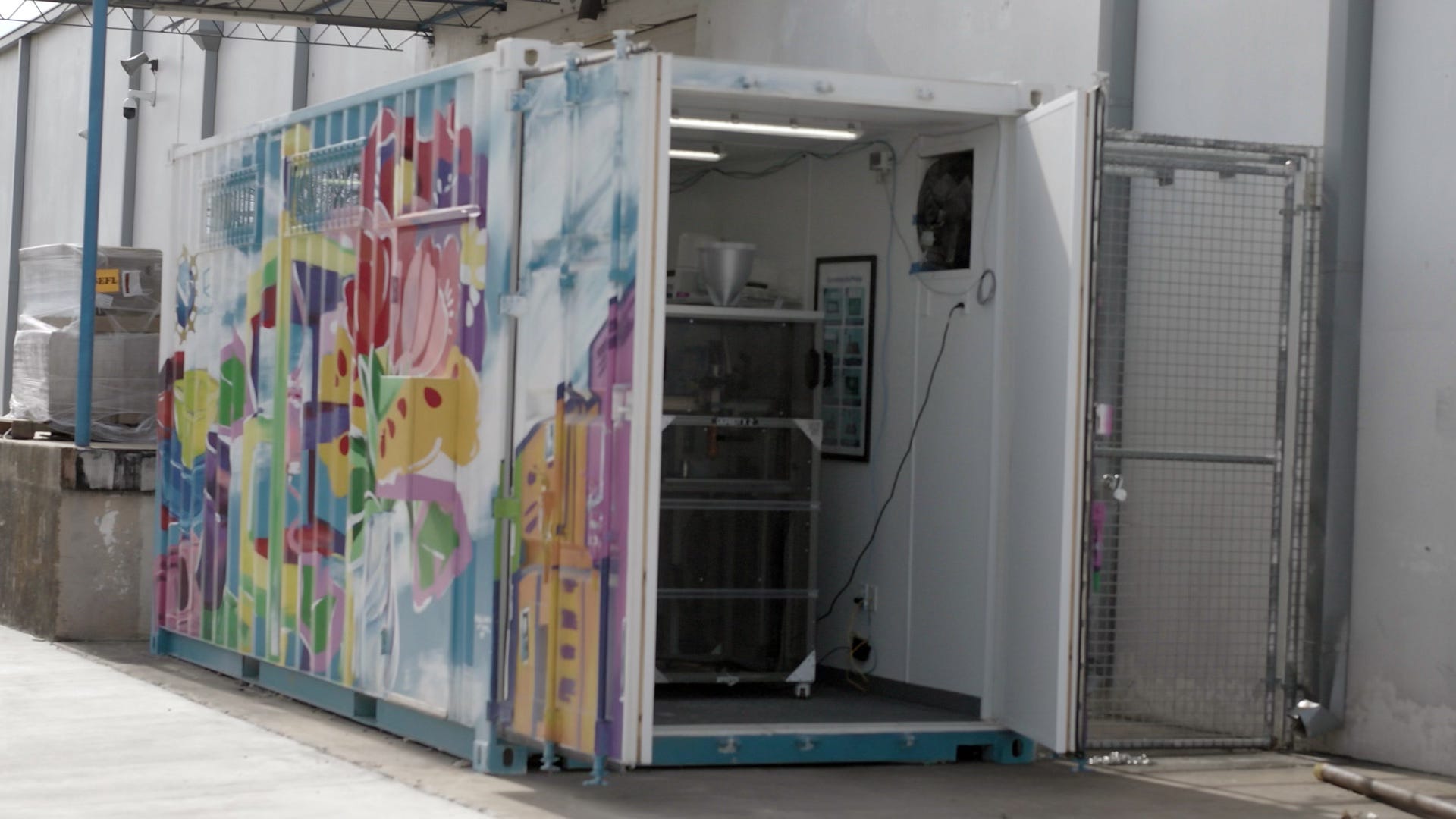
All this together helps make this plastics recycling and manufacturing system easy enough to use to make it practical in remote locations. While plastic has long offered the promise of reuse, the logistics of shipping the plastic to a manufacturing facility capable of reusing it have presented a persistent challenge. ReCreateIt now can offer this response: Why not ship manufacturing instead? In Austin, the 3D printer and plastics shredder operate within the “Gigalab,” the plastics-reuse factory within a shipping container.
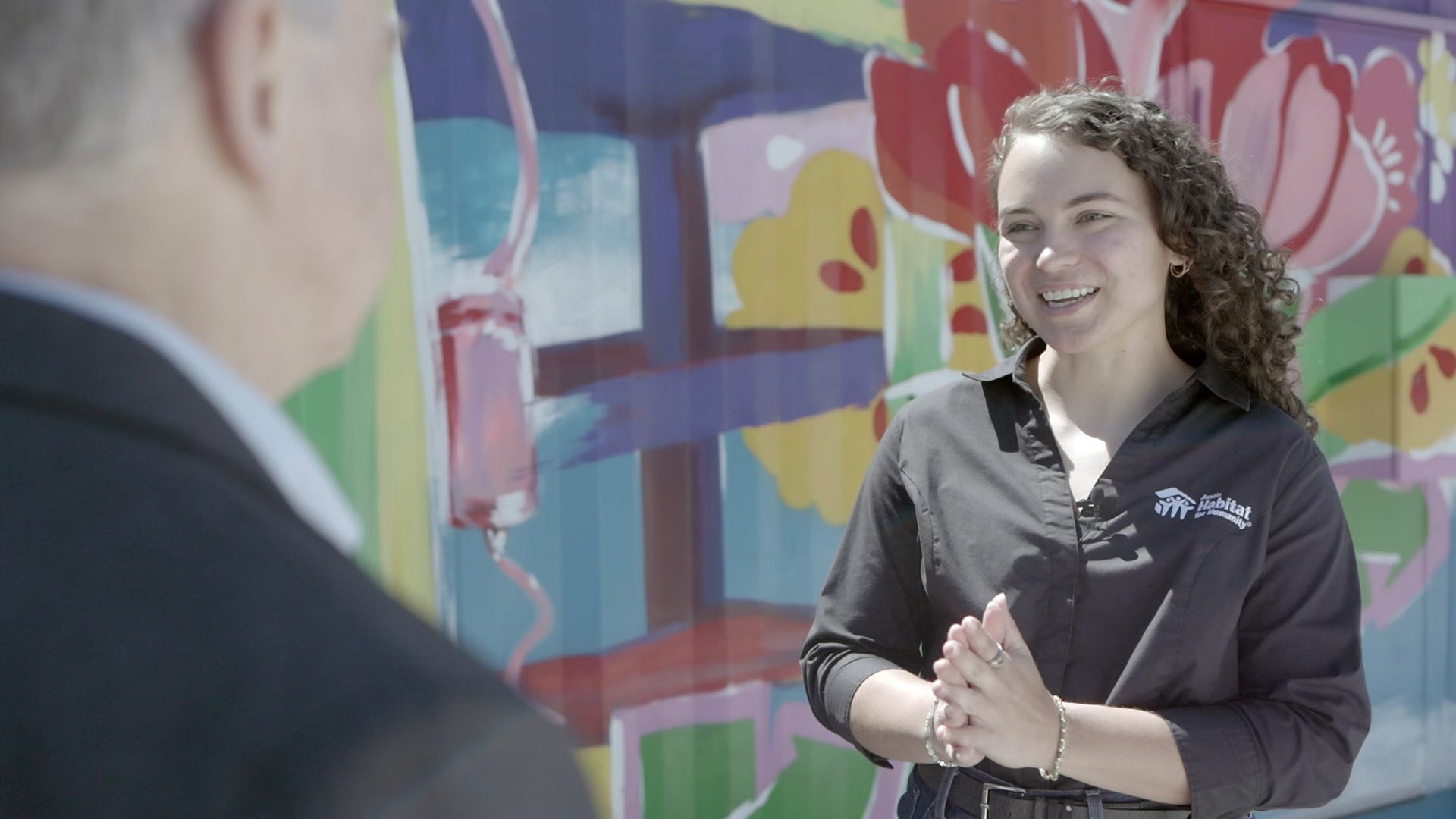
ReCreateIt Project Director Britney Blann now leads the team aiming to reclaim 10,000 pounds of plastic waste with this modular factory. She describes the effort in the episode.
The larger vision imagines locations far from Austin. The concept might have its greatest value in communities or parts of the world where waste management infrastructure is limited. Wherever plastic is piling up, that accumulation could be the location for a modular factory. Two wins result from this: The plastic waste is reclaimed, and the community has local manufacturing capability for needed parts and products.
Watch the full episode: