
The new labor bottleneck in the most advanced CNC machining facilities is brainpower to address both the daily needs and the emerging opportunities of this capability. Data interconnectivity is the answer—but interconnectivity to an extent that is radical for CNC machining.
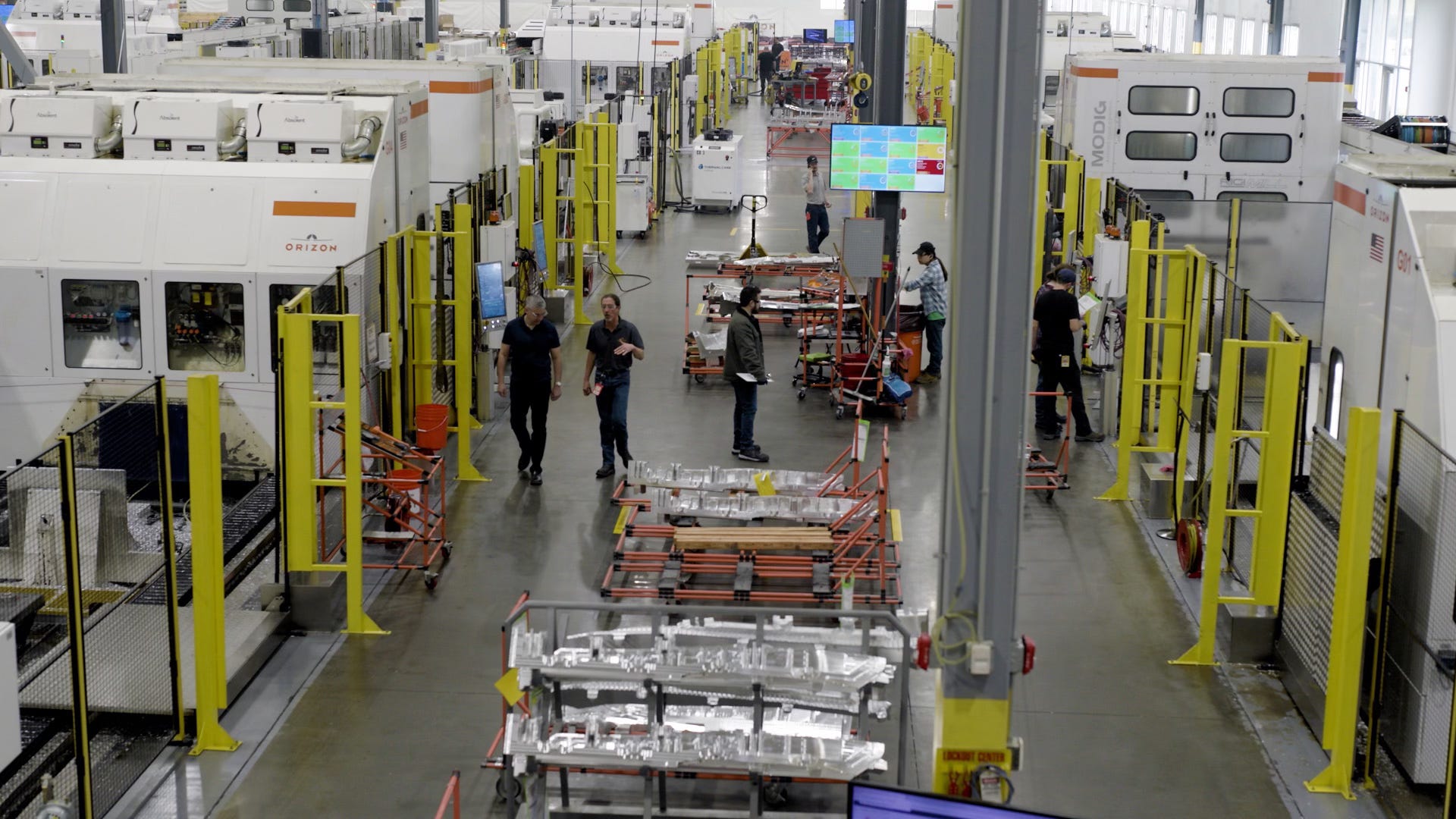
I learned all about this during a visit to Orizon. The Olathe, Kansas, machining provider is among the most advanced machine shops in the United States. Long, sophisticated five-axis machine tools from Modig produce some of the most challenging structural components of both commercial and military aircraft.
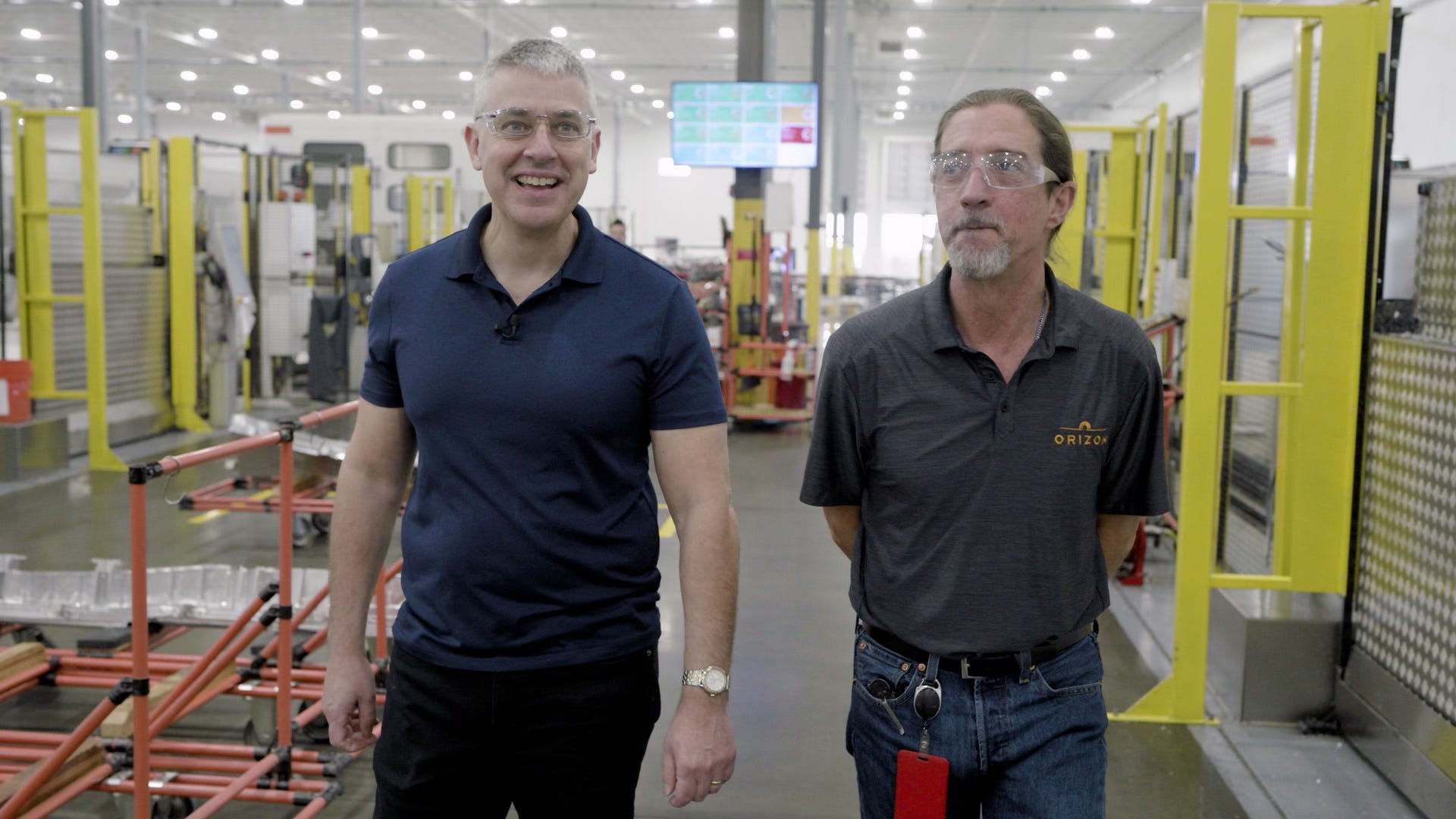
The problem: Tolerances are so tight, and feature-to-feature precision demands are so exacting, a tiny drift from nominal in any aspect of the process—tooling, temperature, machine components, clamping—could lead to an out-of-spec part. Orizon machining experts like Project Manager Rex Kelly (seen above at right) pore through data in search of root causes where there is a quality concern.
However, this is a poor use of time, because Orizon is flourishing. Kelly ought to be developing new processes related to incoming new projects.
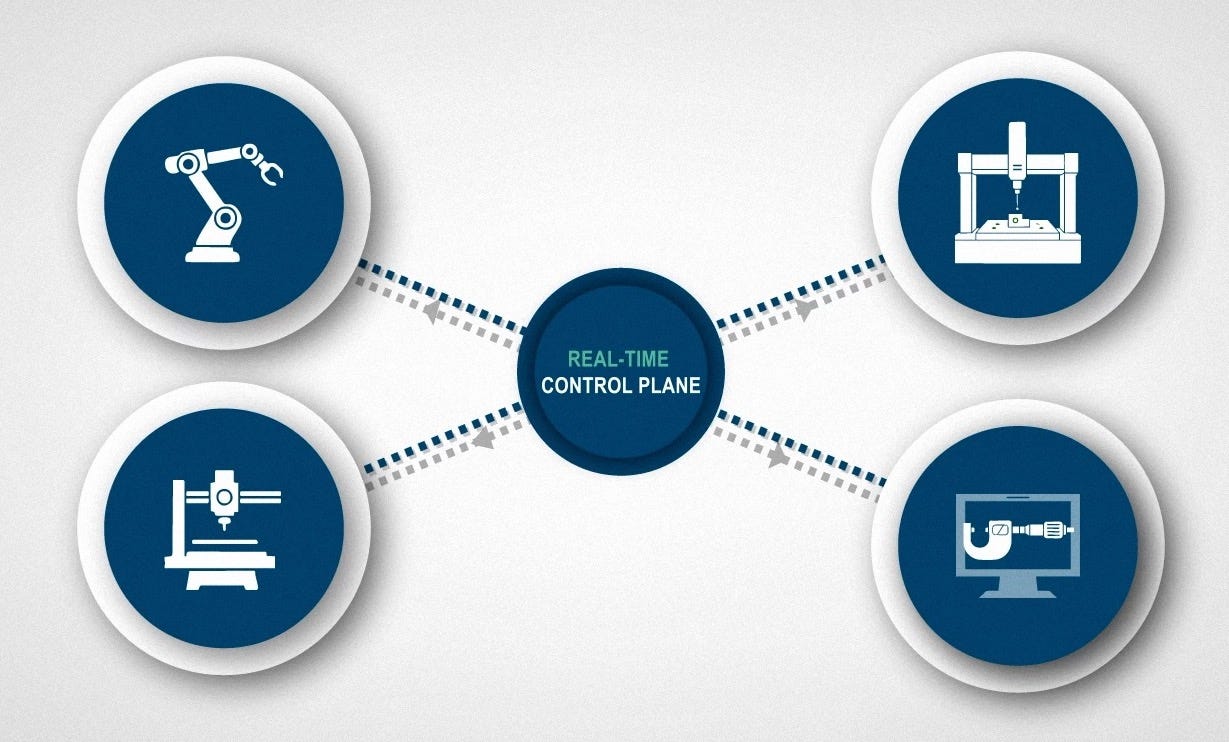
The answer is data interconnectivity, but an application of interconnectivity that goes way beyond machine monitoring as many machine shops practice it. Industrial interconnectivity startup Flexxbotics has new technology that translates for machines speaking unlike languages—translates the data into a shared real-time control plane allowing for shop-wide monitoring and control of the entire machining value chain.
Orizon is an early user. And a committed user. By uniting machine tools, shopfloor measurement, quality inspection, robots, tool room, shop management systems and more into unified real-time control, the automated system will be able to monitor, correlate and respond to far more data (beyond 1 million data points per day) than all of the Orizon team together could ever mine or study.
Setting control limits within this data, and refining the control limits over time as needed, will enable Orizon’s process to detect problems before they affect parts.
Quality issues will decline. Team members like Kelly will be able to turn their attention forward.
Then, the next step will be AI for predictive process control. The Flexxbotics system does not need AI, but essentially prepares the space and extends the welcome for it. In the unified control plane, the critical mass of data needed for AI is gathered together and contextualized.
At one point in our conversation, Kelly offered this comment to characterize how the shop can now perform:
“The factory is like a living organism,” he said. “It has symptoms. There are things taking place that we don’t know about until it becomes a catastrophic failure. Now we’re going to see: Is the organism healthy? And we can deal with it in real time before we have a catastrophe.”
This depiction quietly floored me, because I remember how—nearly 30 years ago—one of my earliest feature articles described the hope that a machine shop might one day function as an organism in this way.
That quote from Kelly appears in the video below. This mini documentary filmed from Orizon about its use of the Flexxbotics technology is the first episode of Manufacturing Unlimited, a show I am creating with ASTM International. Each episode will visit a destination where manufacturing technology is changing. Flexxbotics presented its real-time interconnectivity technology at ASTM’s annual International Conference on Advanced Manufacturing (ICAM), which sponsors this show.
Watch the full episode above to learn more about interconnectivity in CNC machining and its promise to expand capacity by setting expertise free at Orizon.
More episodes of Manufacturing Unlimited are coming! Subscribe to this newsletter and to my YouTube channel to follow the show.