
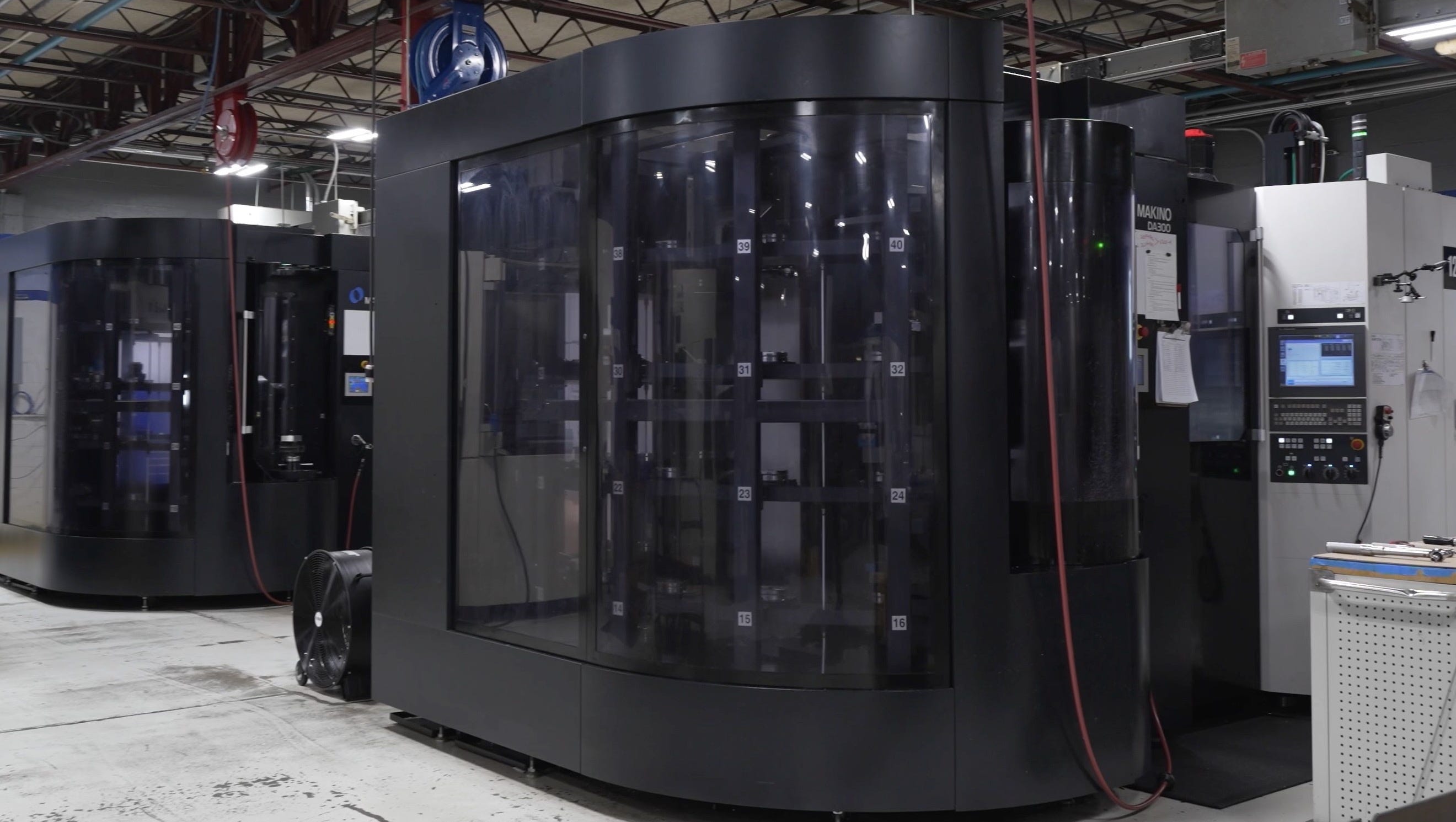
As automation becomes a more expected part of CNC machining processes, it is more commonly provided as an integrated component of the machine tool rather than an add-on. That is, as automation is more baked-in, it becomes more built-in.
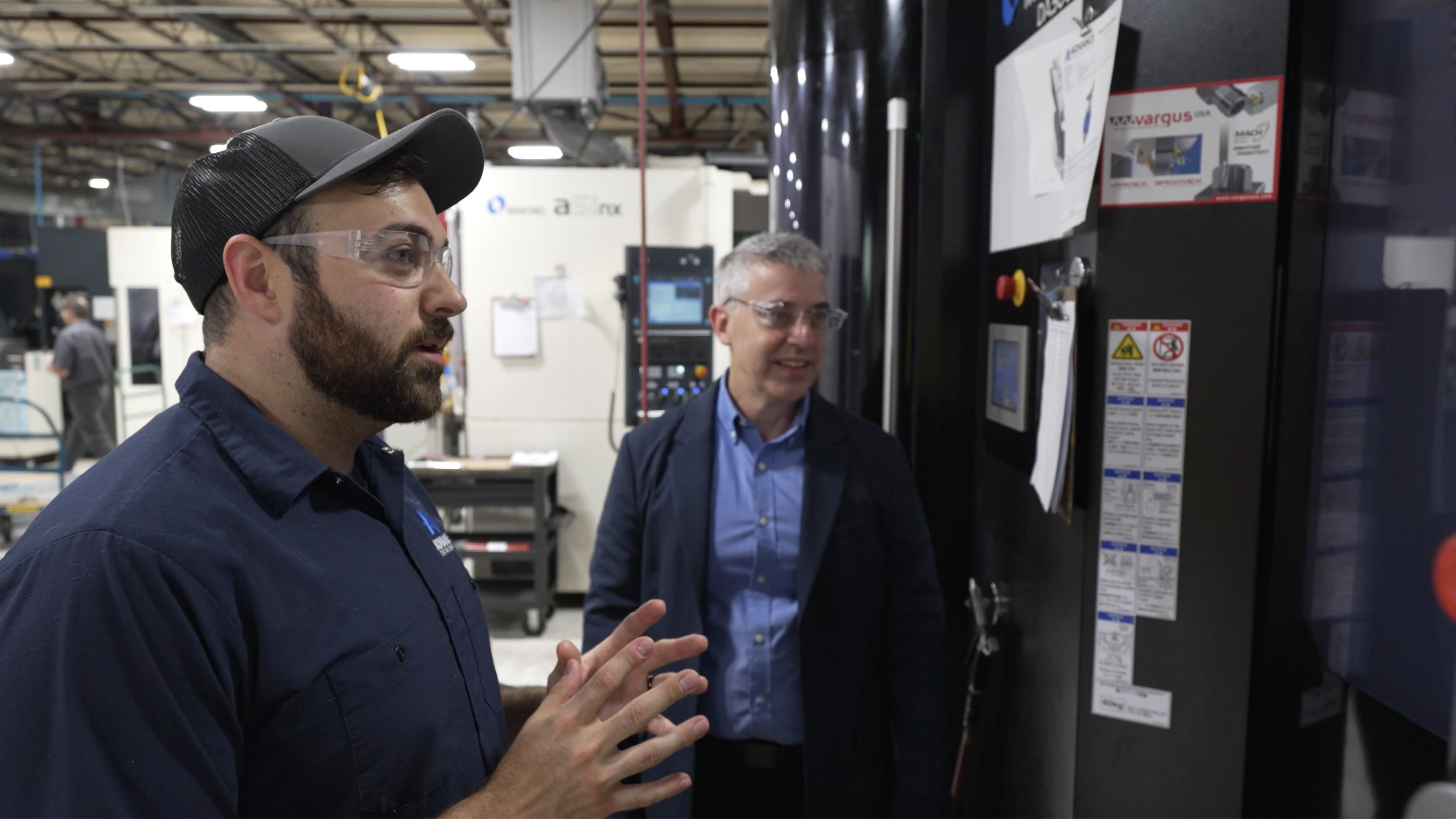
Peyton Hamilton of Advance CNC Machining describes why. Machine shops that have learned to automate also learn there is more speed to be won.
Placing the automation system including the pallet storage and pallet changer all inside of the sheet metal of the machine has the effect of moving all of this as close as possible to the machining workzone. The integration speeds job-to-job changeover and also simplifies one operator’s ability to control and manage a long sequence of jobs.
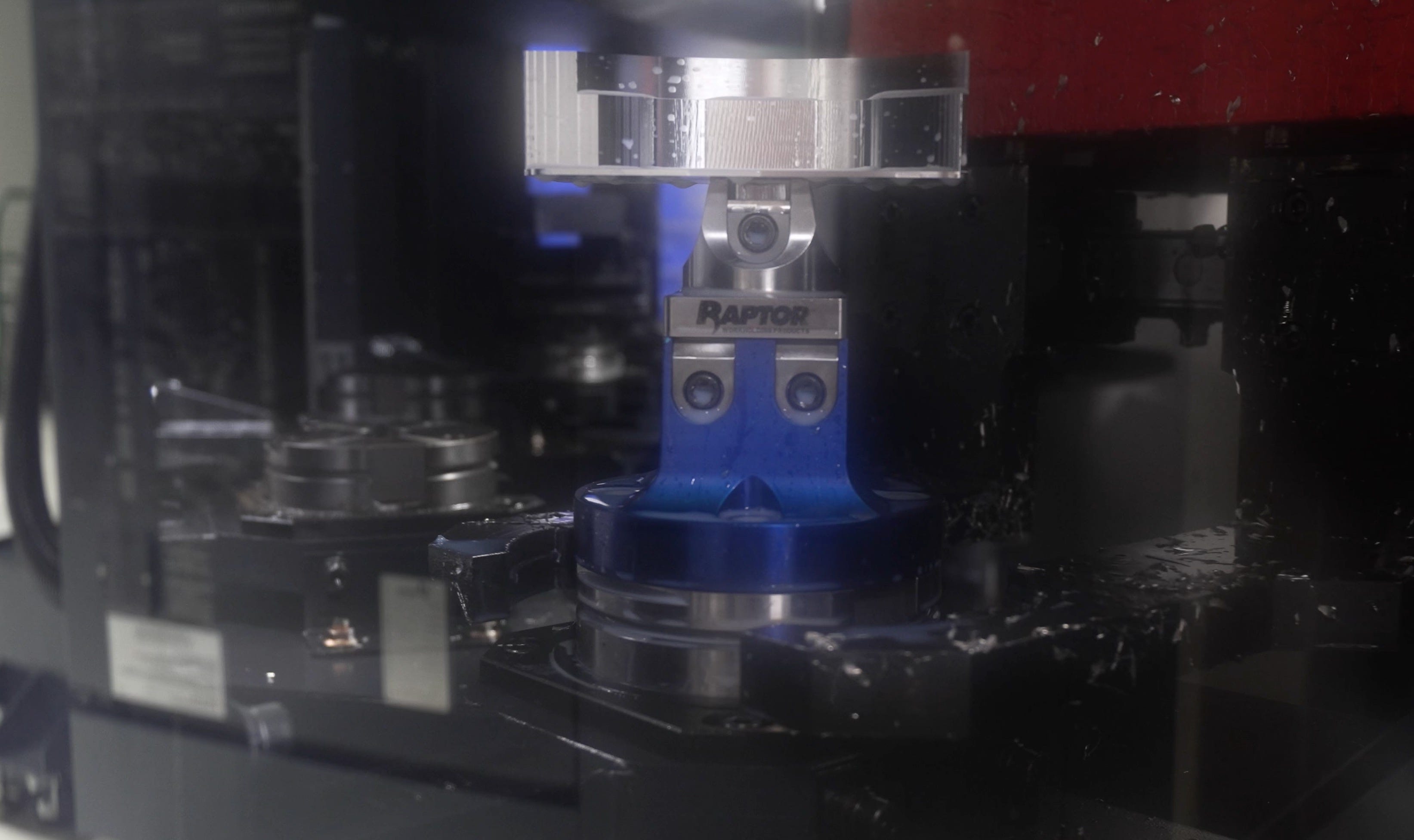
Advance CNC’s two Makino DA300P machining centers each integrate 40 pallets within the machines. The machines are seen at the start of this post. The photo immediately above shows the workchanger grabbing a part to carry into the machine’s workzone.
Peyton, who oversees them, actually learned setup and CNC program management on these machines. To learn machining on this equipment is not the typical machinist experience. He says this was like learning to drive in a Ferrari.
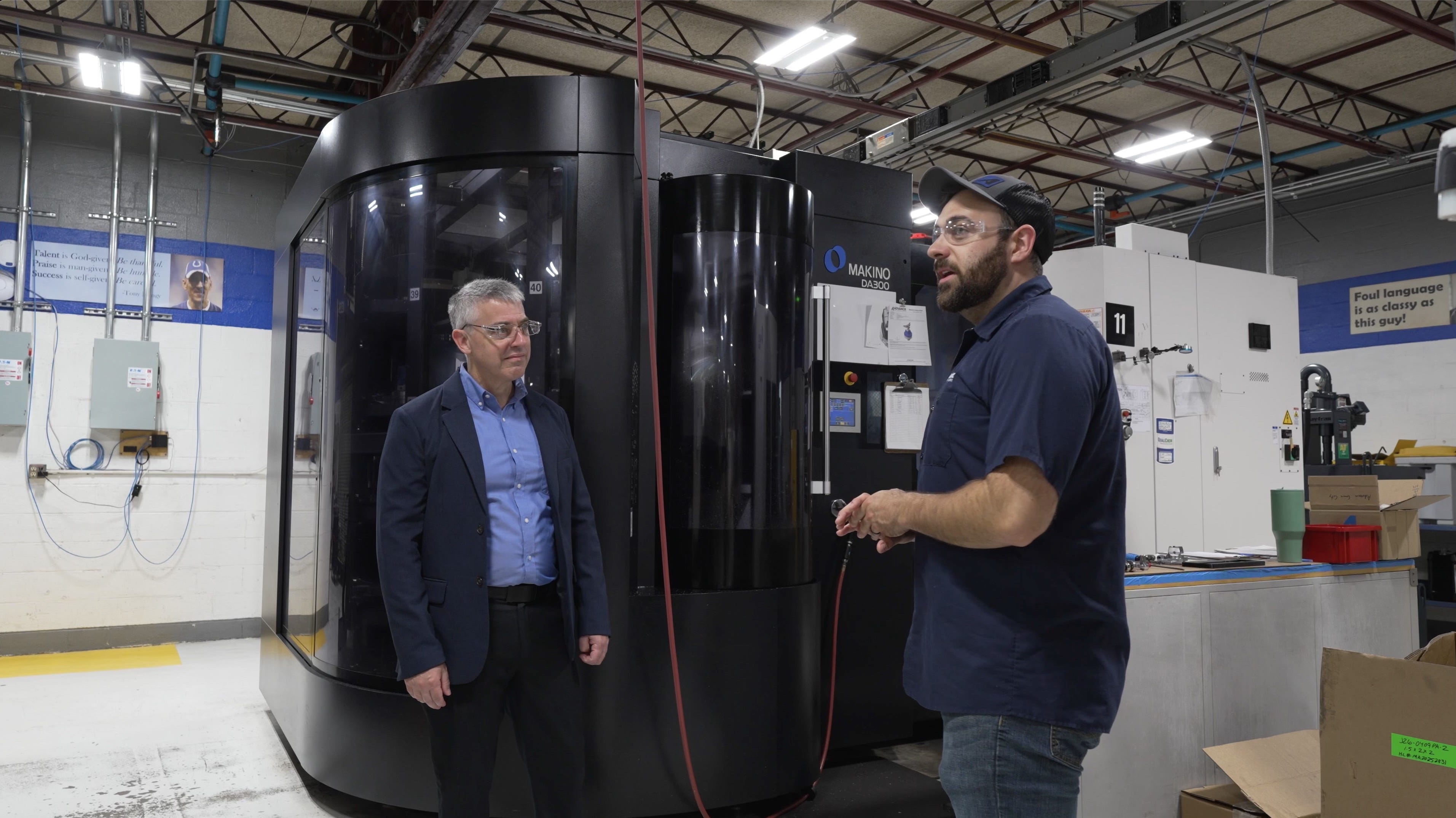
I spoke with him to understand how to think about machine tools that are essentially like self-contained machine shops, given the variety of jobs they are at any moment tooled and ready to run. Another area of efficiency he experiences is in the ease of continuing production during quality-related delays such as first-article inspection. The current job can be paused and another job can be loaded, even if just to run a few more pieces of a 100-piece run, while the current job is waiting for validation.
Here is my conversation with Peyton Hamilton about machining centers with built-in pallet automation: