
I have been enjoying getting to learn about the journey of discovery Lifestyle Additive Manufacturing is following. Lifestyle was given early use of a new PA-12 nylon for selective laser sintering (SLS) from ALM – Advanced Laser Materials, developer of polymers for SLS machines from EOS. The new PA-12 is black, black all the way through, with no need for a dye. Lifestyle is finding the material’s optimal processing parameters. The inherent color would have been benefit enough; standard SLS PA-12 is white. But in the course of their work, the Lifestyle team has been discovering ways—good ways—that the black material behaves differently than the white, delivering unexpected beneficial effects.
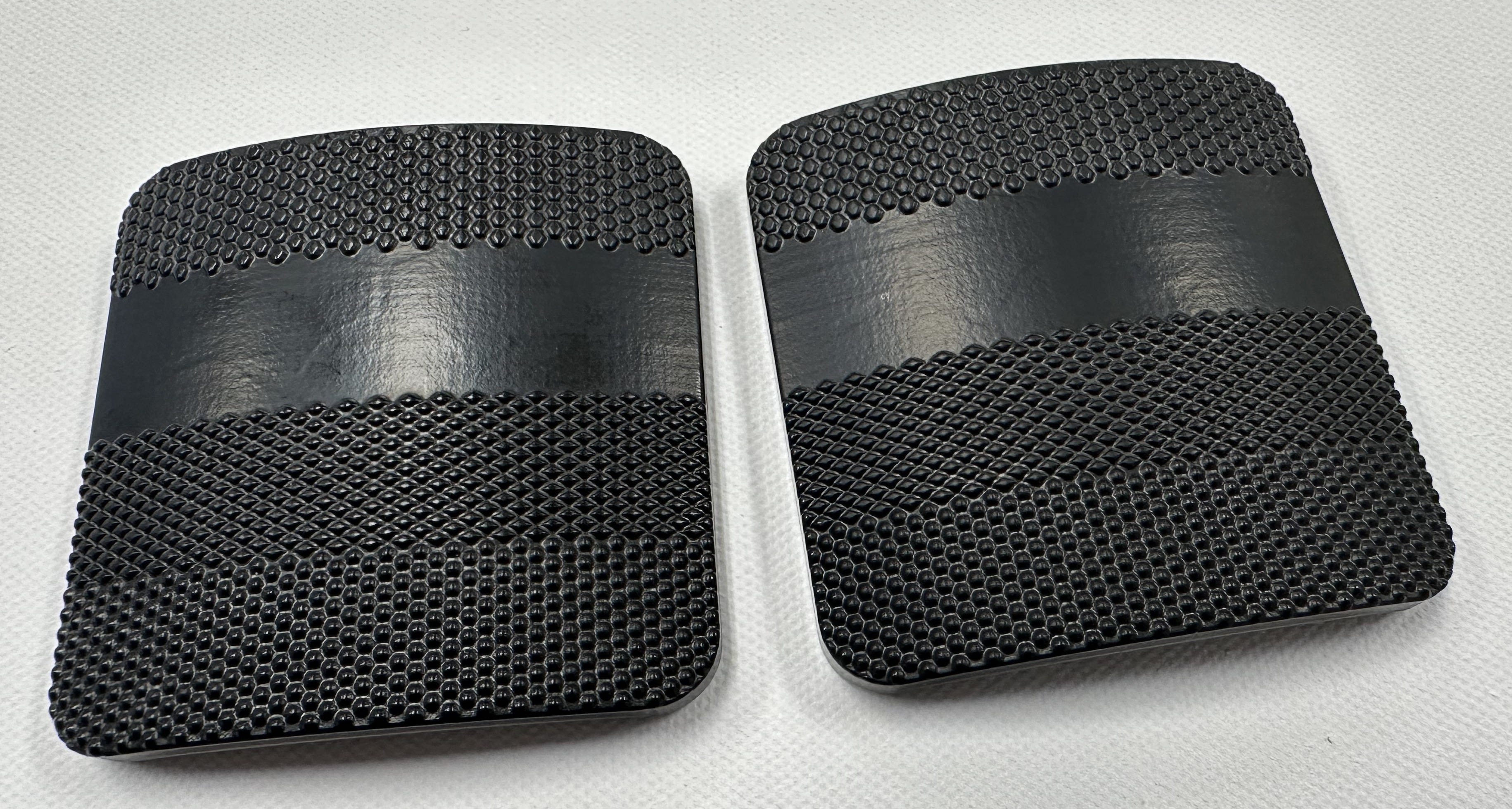
I’ve now co-authored an article with Nate and Leo Stevens of Lifestyle to report on the black PA-12 benefits. The benefits include (A) improved forgiveness for dimensional precision and (B) antistatic behavior significantly different from white nylon.
In this video, I talk about the precision advantage. Both SLS materials are capable of fine detail 3D printing, but the black material allows the outcome to be achieved with less process finesse and/or fewer iterations. Some test panels in the video make this point.
The antistatic advantage is the benefit I delayed reporting, as Lifestyle waited on the results of independent tests. It was clear to the team the black material responded differently to static charge to some extent. While the white nylon powder has notorious “static cling,” just a tap of a black part easily allows any loose black powder to fall away. But the precise extent of the effect had to be measured.
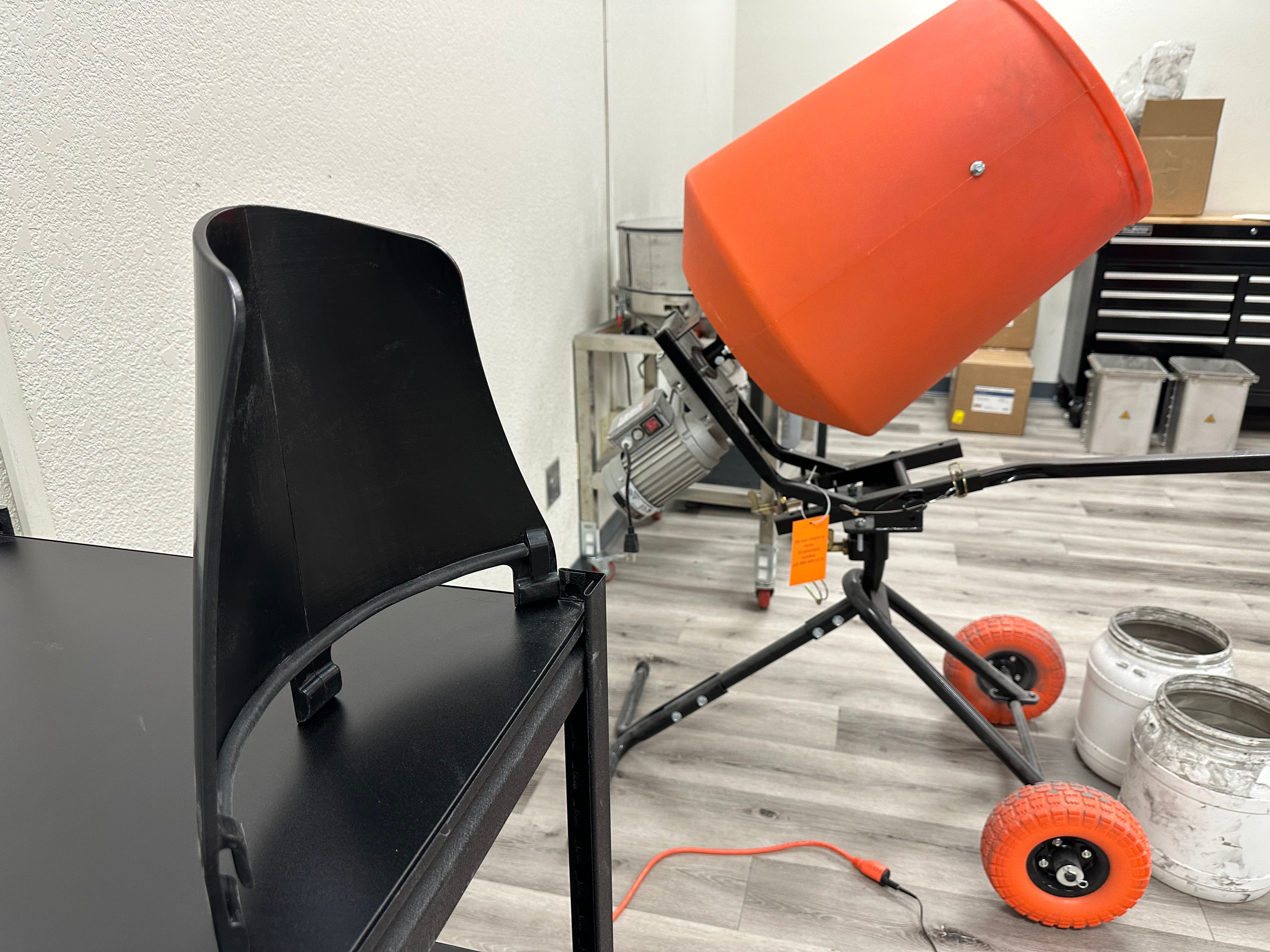
Initial testing results are now in. From the article, here is what can now be said about the electrostatic behavior:
Independent testing by an ISO-accredited laboratory confirmed the effect, measuring the material’s resistivity at approximately 10¹¹ ohms per square (a standard unit of measuring resistivity). This measurement places the black PA-12 within the category of “antistatic” materials. Its resistivity is significantly less than standard PA-12 (which behaves as an insulator), but not as low as static dissipative or ESD-safe materials.
Charge decay testing further clarified this distinction. Under a standard test condition, the material discharged from 5,000 volts to 10% of that charge in around 4 seconds. This represents a clear improvement over standard nylon, but does not meet the under-1-second requirement associated with certain ESD standards.
In other words, the material reduces static buildup and allows charge to dissipate, just not rapidly enough for the most sensitive electronic environments requiring certified ESD-safe materials.
This level of performance is meaningful. Many applications do not require full ESD compliance, but do benefit from reduced static effects. In medical and pharmaceutical contexts, static charge can influence the behavior of fine powders or atomized fluids. The ability to reduce static in a Class II biocompatible material can improve consistency in particle size and distribution in devices in which this affects dosing and performance.
Similarly, in general electronics-related applications, the material represents an improvement over commonly used plastics such as ABS or acrylic, which are fully insulative. While not a replacement for ESD-safe materials where those are required, black PA-12 can provide a practical intermediate option, especially when combined with its other advantages for precision and processing.
The point about this being a biocompatible antistatic material is significant. Electostatic discharge (ESD)-safe materials for SLS are available, offering even less resistivity, but the material is not necessarily suitable for a medical application. This material is.
Could the new black PA-12 nylon itself meet the standard for being ESD-safe? Maybe. The sample tested missed this level, but not by an uncrossable gap. Because the antistatic property is almost certainly a result of the carbon in the black material, it may be that different arrangements of carbon could produce different effects. Different printing parameters might produce parts with different resistance, including resistance in the ESD-safe range. This is speculation, but it describes the future course of testing Lifestyle will follow.
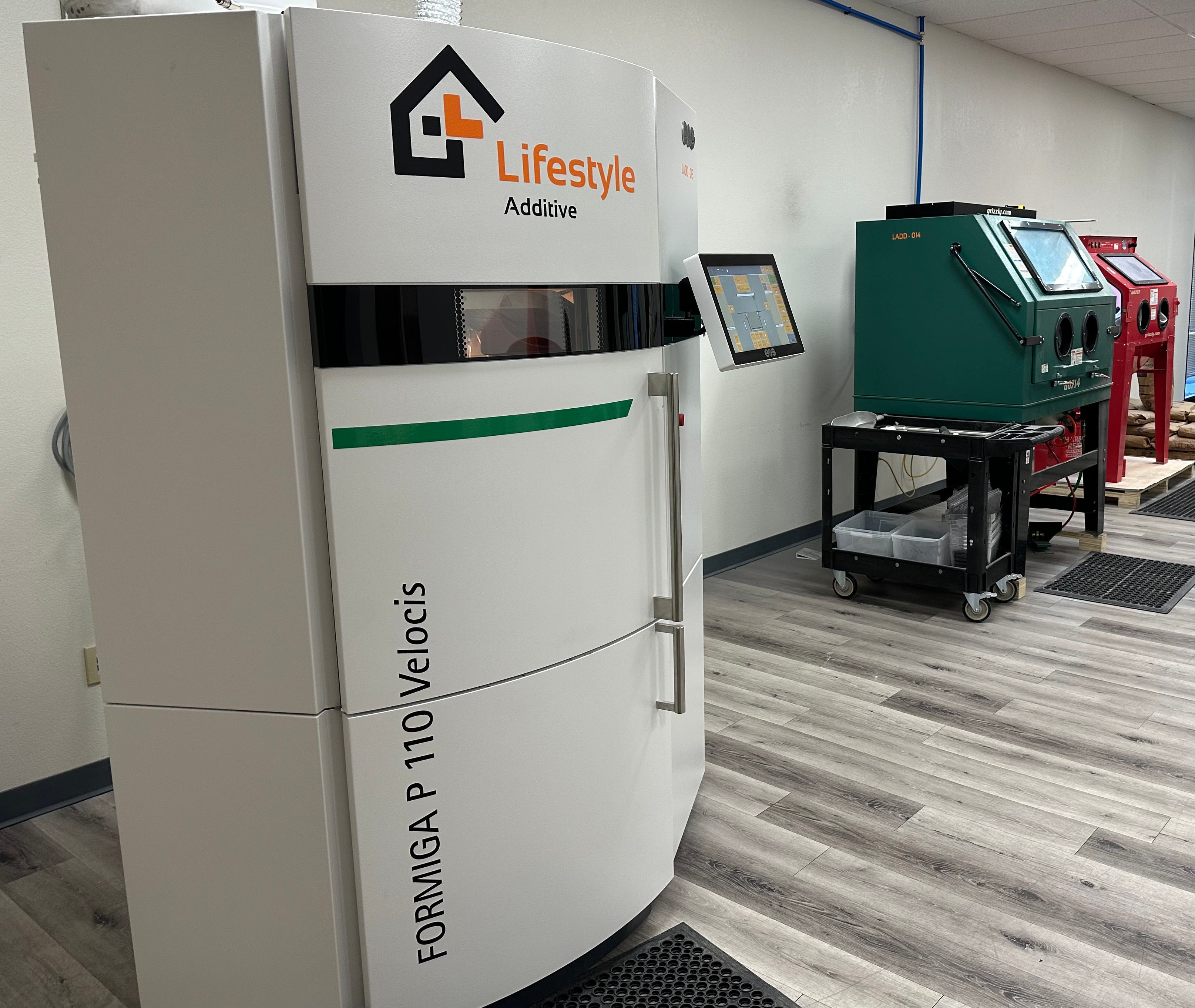
Since posting the video on precision, more has come to light on this effect as well. In addition to being forgiving of fine dimensional detail in regard to the laser, the material is similarly forgiving in regard to physical cutting. Experience has shown the material to be clearly more machinable than the white SLS nylon, simplifying postprocessing if added work is necessary to get to a fine tolerance.
Read more about the current understanding of the black PA-12 nylon in my article with the Lifestyle team: